

Don't just do something, stand there 🚦 — Action bias
Why doing something often feels safer than waiting.

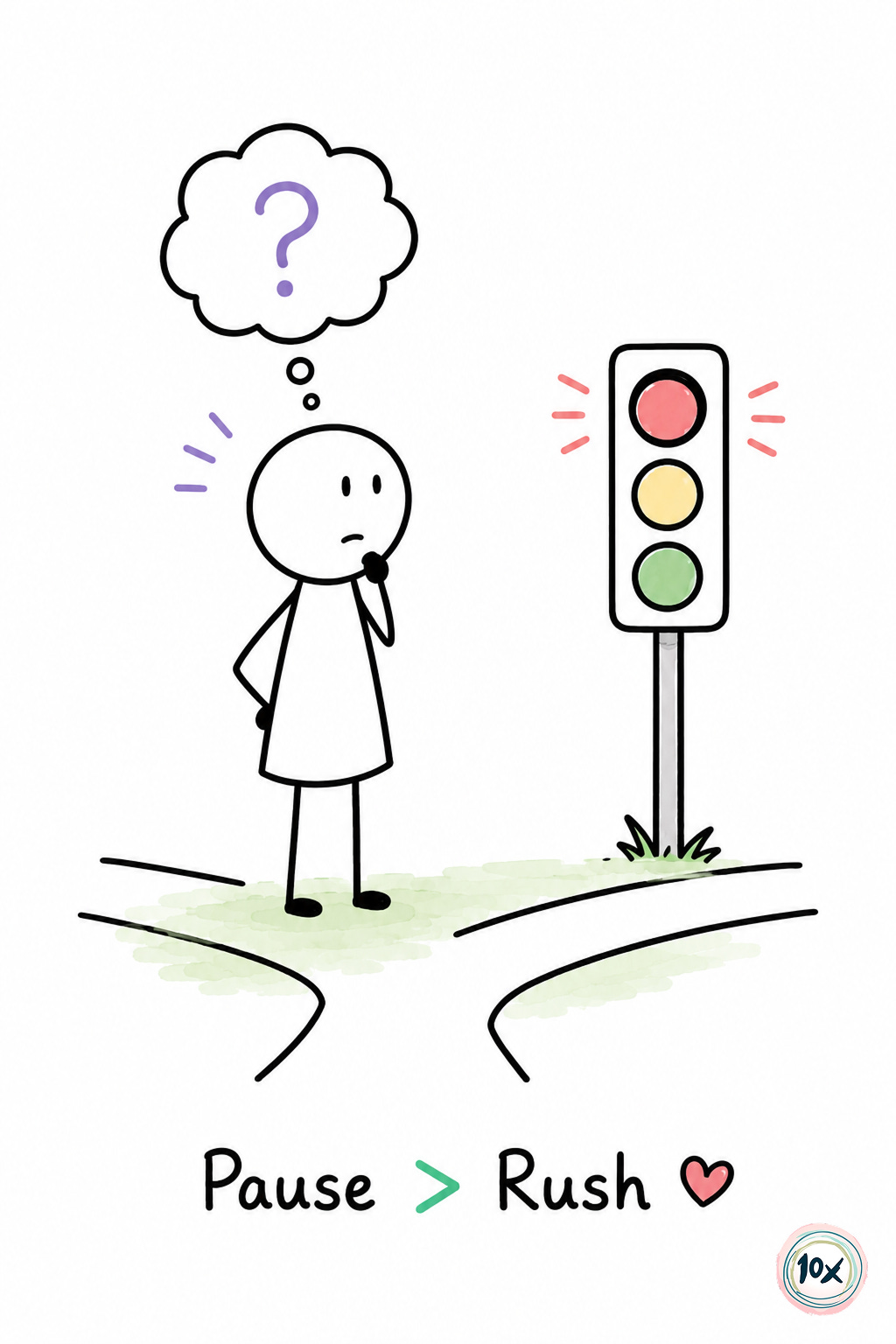
I gave my husband advice yesterday before he finished telling me the problem. I told myself I was being a helpful partner. What I was actually doing was rushing to do something, in fact, anything to feel useful.
The other day, I spent an hour trying to figure out how to speed up traffic on a project that I’m working on. The site is genuinely growing close to 30% every month. Now is the time to let it stew and let Google do its magic.
But the idea of not doing anything about it just feels wrong. Waiting without acting feels wrong, even if not acting is the need of the hour.
Behavioral economists call it the “action bias.”
Action bias is a mental shortcut that makes doing something feel safer than waiting.
It’s the opposite of what overthinkers usually get accused of. We’re told we think too much, deliberate too long, hesitate when we should move. All that is true a lot of times. But this behavior we underestimate: the times we act when we shouldn’t have, because doing something felt safer than doing nothing.
Most cultures reward visible action
Sitting with a problem looks like passivity. Doing something, anything, looks like progress. So when something uncomfortable shows up, like a tough message on your phone, a new piece of bad news, an unexpected decision, the impulse is to respond, to fix, to act.
An example from the research world is soccer goalies during penalty kicks. The data shows that staying in the center of the goal is the best move about a third of the time, better than diving left or right. But goalies dive in over 90% of penalty kicks! The reason being, diving and missing feels less bad than standing still and missing.
The goalie who dives “tried.” The goalie who stood still “did nothing.”
The same bias plays out everywhere. We reply too fast. We ship the update too early. We give the advice before the question is finished. We make the decision before more information arrives. We act, not because acting helps, but because not acting feels like failing.
Action bias hides especially well because culture explicitly rewards it.
“Be a self-starter.” “Don’t overthink it.” “Bias for action.” “Move fast and break things.”
Every one of those phrases assumes action is the default virtue and waiting is the default sin. They’re right often enough that the bias gets reinforced. They’re wrong often enough that thoughtful people get pushed into mistakes they wouldn’t otherwise make.
The honest line: sometimes the most courageous move is to do nothing for 24 hours. Not to delay. To wait, on purpose, because the right move hasn’t arrived yet.
Three signs you’re in action bias, not action
❶ You’re acting partly to escape a feeling. Anxiety about the silence, guilt about not responding, restlessness about not “doing your job.”
❷ You can’t articulate what the action is supposed to accomplish, beyond “doing something.” If you can’t write the goal in a sentence, the action isn’t aimed at the goal. It’s aimed at the discomfort.
❸ A more experienced version of you, watching this situation from outside, would say “just wait.” But the part of you that’s IN the situation can’t tolerate the wait.
A simple test
When you feel the pressure to act, ask one question:
If I do nothing right now, what actually happens in the next 24 hours?
Most of the time, the honest answer is: not much. The message stays unanswered for a day. The update stays unshipped for a day. The decision stays open for a day. The world keeps turning.
If the honest answer is genuinely “something bad happens,” act. The pressure was real signal.
If the honest answer is “nothing changes,” the pressure was the bias. Don’t feed it.
Doing nothing is doing something. Waiting is a decision. Patience is the cost you pay for a better answer.
The overthinkers among us already know how to deliberate. The skill we need to add isn’t more action. It’s the discipline to recognize when the urge to act IS the bias itself.
That kind of pressure-to-act-now moment is why I built Pinwheel. It’s a WhatsApp thinking partner that catches you mid-loop and names what’s actually happening. Unlike most AI, it doesn’t soften the read to please you. When you’re stuck in your head, the last thing you need is something that agrees with you.
Free during beta. If you try it, I’d love to hear your experience. ❤️