

The pre-mortem
A 5-minute tool for people whose brains catastrophize anyway.

Writing this from India, where I'm spending the month on holiday with family. Two of my siblings and I live in different countries, so when we all manage to be in the same place at the same time, it's a big deal. We planned this one for months. A get-together in the mountains, 🏔️ beautiful hikes, mesmerizing view from the hotel room. We thought of everything that could go right. We forgot to ask what could go wrong.
Today's edition is about the question we forgot to ask. Enjoy the read.
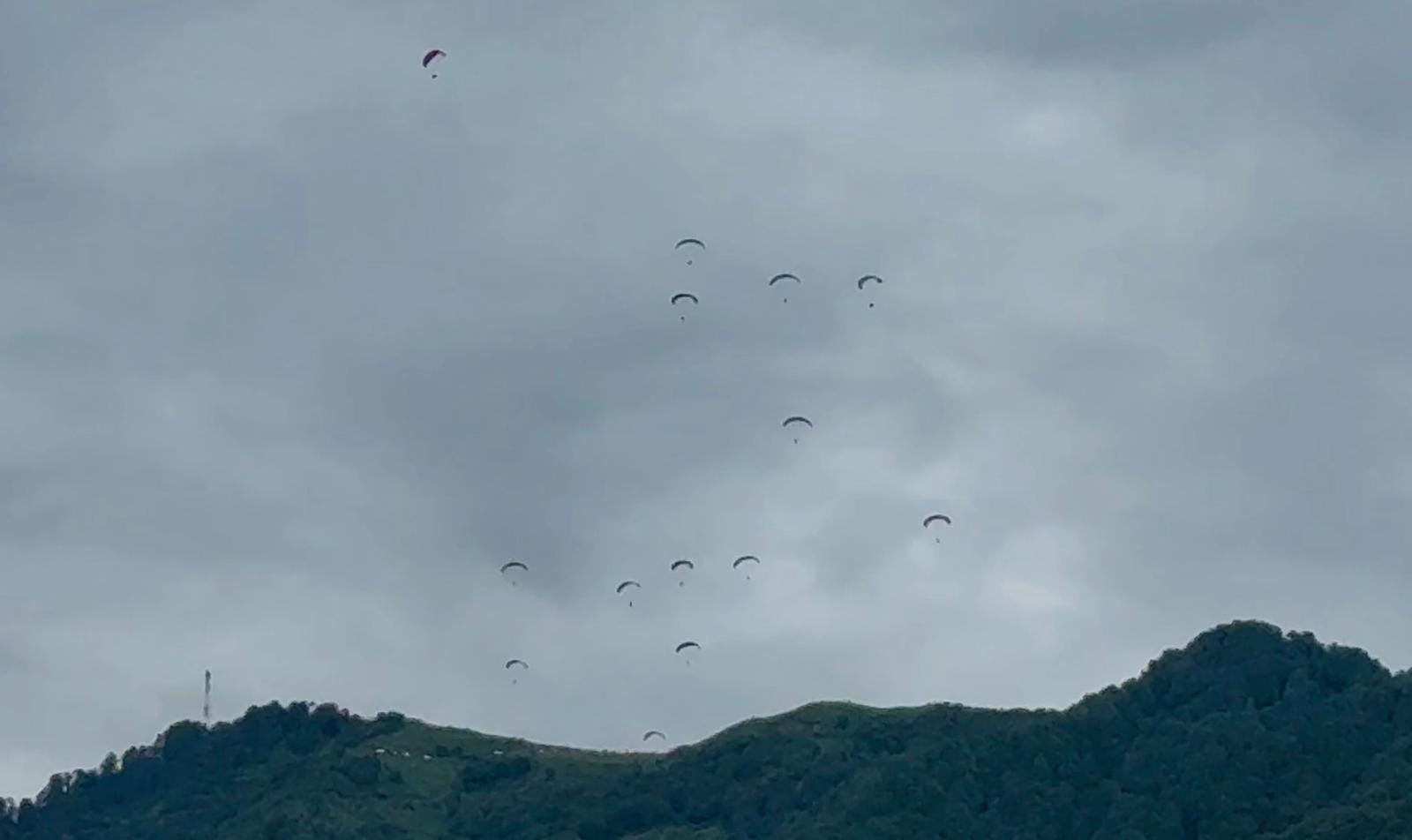
Thirteen of us arrived at the paragliding landing site in Bir Billing (the paragliding capital of India) with the kind of excitement that comes from months of planning. We watched the gliders drift down from the higher mountains and land right in front of us. It was mesmerizing. They looked like the swifts back home in Singapore, the birds you spot in high flight right before a storm rolls in. 🦅🌧️
Which, in hindsight, was the clue I missed.
It rained soon after. And the next morning. Then the morning after. The rainy season had begun the week we landed. Paragliding stopped. So did our planned hike to Triund, because in this season, on that terrain, the landslide risk is real. If we had come one week earlier, we’d have flying videos to show for the trip. Instead, we had downpours and rearranged plans. It was the kind of predictable-in-hindsight disappointment that five minutes of asking “what could go wrong” would have prevented.
I didn’t ask that question once during the months of planning. Neither did my siblings. We were too busy imagining everything that would go right.
The trip is still good in the ways that matter. Meeting family. Our kids playing with their little cousins. My nephew, who recently learned to walk, is running all over the place. Just not the specific things we planned for. The paragliding, the hikes. And that could have been foreseen.
This is where pre-mortem can help.
Pre-mortem is the practice of imagining that a plan has already failed and working backward from there to figure out why.
Sounds bleak. Feels bleak. Consistently produces better plans than any positive brainstorm.
How it works
Take five minutes before you commit to something. Anything: a project, a trip, a difficult conversation, a decision, a launch. Then imagine you’re six months in the future. It has failed. Not “didn’t quite work out.” Failed. Something obvious went wrong. What?
Then list what caused it.
That’s the whole tool. Five minutes. One question. You don’t need permission from anyone. You don’t need a spreadsheet.
Why it works
There’s a specific psychological reason that imagining failure produces better plans than imagining success.
When we imagine a plan going well, the brain fills in a smooth version. Success is imagined as the average of the possible good outcomes. It doesn’t force us to think about individual failure modes, because success is a coherent picture without them.
When we imagine failure, the brain does the opposite. Failure isn’t coherent. To imagine a project failing, you have to pick a specific reason. And the moment you pick one reason, your brain generates others. What else could have killed it? What if two things went wrong at once?
The research on this is unusually clean. Gary Klein and his team showed that teams that did pre-mortems identified about 30% more failure points than teams doing standard risk analysis. Same amount of time, more insight, better plans.
The reason is that “imagine the failure” is a permission slip. Suddenly it’s okay to name the ugly things you weren’t allowed to name in a “positive brainstorm.”
For overthinkers, a bonus
If you’re the kind of person whose brain lies awake at 2 a.m. imagining the worst, you already have a natural talent for imagining bad futures. That kind of pre-living usually causes trouble. Pre-mortem is the one time it works in your favor.
Put your anticipator brain to work at the start of the project, on purpose, for five minutes, in writing.
The catastrophizing pays a dividend for once!
Three questions to structure the five minutes
If you want more scaffold than “just imagine it failed”:
❶ Six months from now, this has failed. Write one sentence describing what went wrong.
Force yourself to pick something. “I don’t know” isn’t allowed. Guess.
❷ What warning signs would have been visible early?
The failure you imagined always leaves footprints. What are they? When would you have first seen them?
❸ What one small thing, done now, would make that failure less likely?
Not “fix everything.” Just one thing. The cheapest possible mitigation. The version you’re actually likely to do.
Five minutes. Three questions. One better plan.
Not every decision needs a pre-mortem
Trivial choices don’t warrant the ceremony. Reach for it when:
You’re about to commit real time or money
You’re excited enough about a plan that the excitement is doing your thinking for you
Your gut says “this feels great” and no one has yet said “but”
You’re deciding at the end of a planning session, when everyone’s tired and just wants to move
Skip it when:
The decision is small and reversible
You’ve already done one for this project
The plan hasn’t taken enough shape to fail in specific ways
The counterintuitive part is that imagining the failure doesn’t make you more pessimistic. It makes you calmer. When you’ve already faced the worst version and named what could kill the plan, the actual work of the plan feels lighter. You’re not defending against a vague dread anymore. You’re addressing three specific things.
Great Learning here.